Horse Care Essentials for New Owners: Daily and Yearly Checklist
Horse Care Essentials for New Owners: Daily and Yearly Checklist. Discover practical facts, risks, and care considerations before you decide what to do...
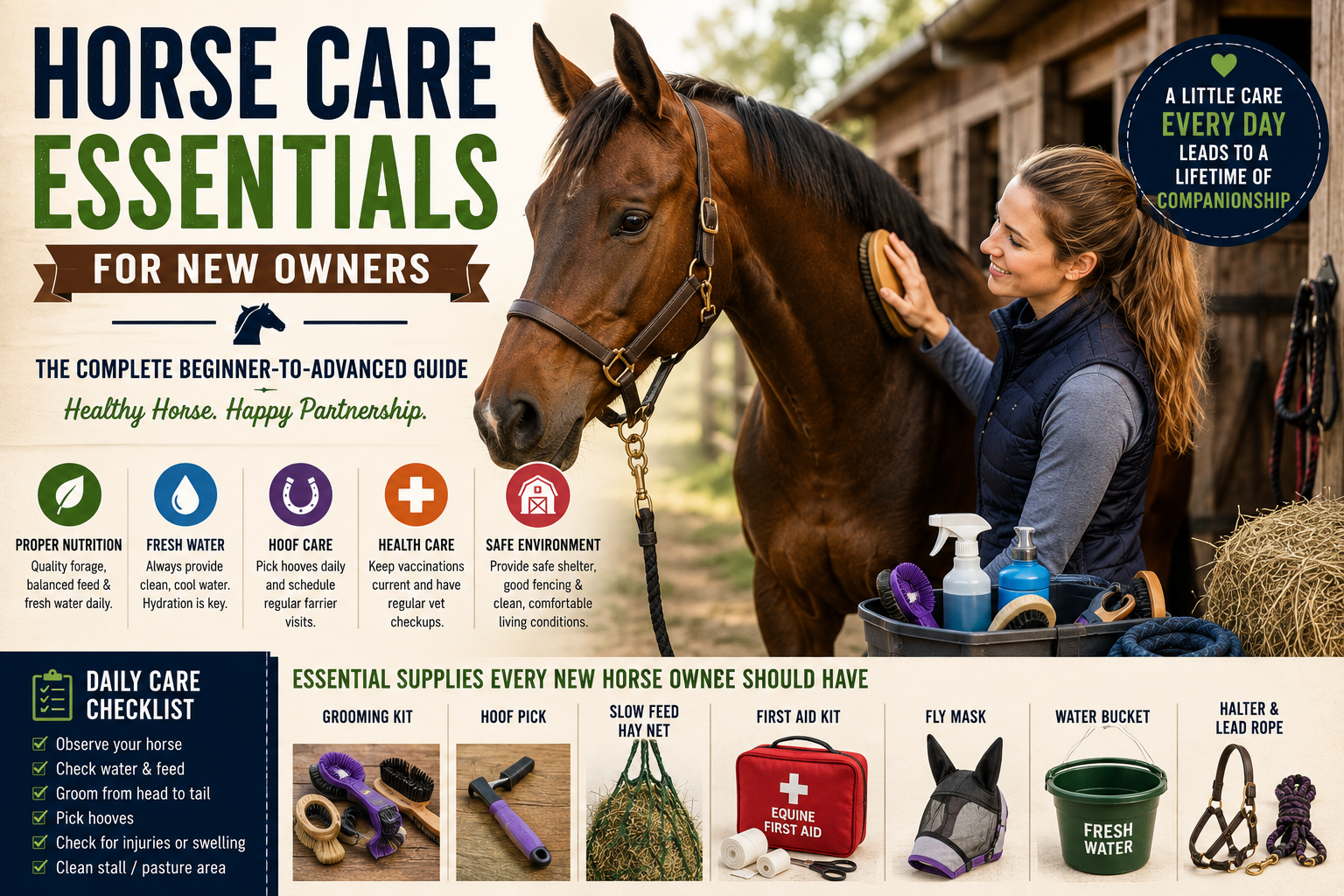
Horse Care Essentials for New Owners: Daily and Yearly Checklist
A horse requires daily feed, fresh water, turnout or other safe exercise opportunities, hoof care, veterinary support, and social contact. Ownership cost is much more than a purchase price. The right facility has safe fencing, appropriate shelter, reliable forage, and an emergency plan.
What the context tells you
Horses are grazing herbivores with digestive systems adapted to frequent fiber intake. Sudden dietary changes can increase risk of colic or laminitis in susceptible animals. Teeth and hooves need regular professional attention, while workload and climate alter water and energy needs.
Practical steps and everyday care
Before buying, arrange a pre-purchase exam, calculate boarding and ongoing expenses, and confirm access to a veterinarian, farrier, and knowledgeable trainer. Inspect daily for appetite, manure output, gait, hoof heat, and behavior. Keep a record of vaccinations and dental checks.
Make the advice individual to the horse
Horses vary in age, workload, body condition, conformation, temperament, and health. A useful plan accounts for forage availability, clean water, social contact, hoof care, dentistry, shelter, and the skill of the person handling the horse. Sudden changes in feeding or physical work can have serious consequences. Record changes in gait, manure, appetite, and behavior, and consult an equine veterinarian for concerns beyond routine management.
A real-world example
A first-time buyer may budget for feed and purchase price but forget emergency veterinary transport, fencing repairs, farrier visits, and boarding during travel. Making a twelve-month care budget before purchase exposes these gaps. A good horse-care plan also names who will feed and observe the horse every single day.
Safety, welfare, and common misconceptions
Repeated rolling, persistent pawing, inability to rise, severe lameness, and unusual sweating can be emergencies. Beginners should seek hands-on instruction from competent professionals rather than relying on internet checklists alone.
A quick decision checklist
Assess the individual horse’s condition, workload, environment, and daily routine.
Cover budget, forage, water, hoof care, veterinary support and long-term responsibility.
Record appetite, manure output, movement, behavior, and any recent management changes.
Seek qualified veterinary, extension, or species-specialist guidance before using medication or making major changes.
Frequently asked questions
Can one chart decide what every horse needs?
No. Body condition, fitness, age, workload, tack fit, and health make individual assessment essential. A chart can prompt a question, but it cannot replace professional examination or practical observation.
When should an equine professional be called?
Call for colic signs, marked lameness, breathing problems, severe weakness, or changes in behavior that suggest pain. Routine dental, hoof, and nutrition planning also benefits from professional input.
Related reading
how much weight can a horse carry
Reliable resources for further checking
Editorial status: draft. Check current professional guidance and local rules before publication; urgent symptoms require appropriate veterinary help.
