Goose Eggs: Size, Shells, Laying Season, and Food Safety
Goose Eggs. Explain how goose eggs differ from chicken and duck eggs, proper handling and.
Goose Eggs: Size, Shells, Laying Season, and Food Safety
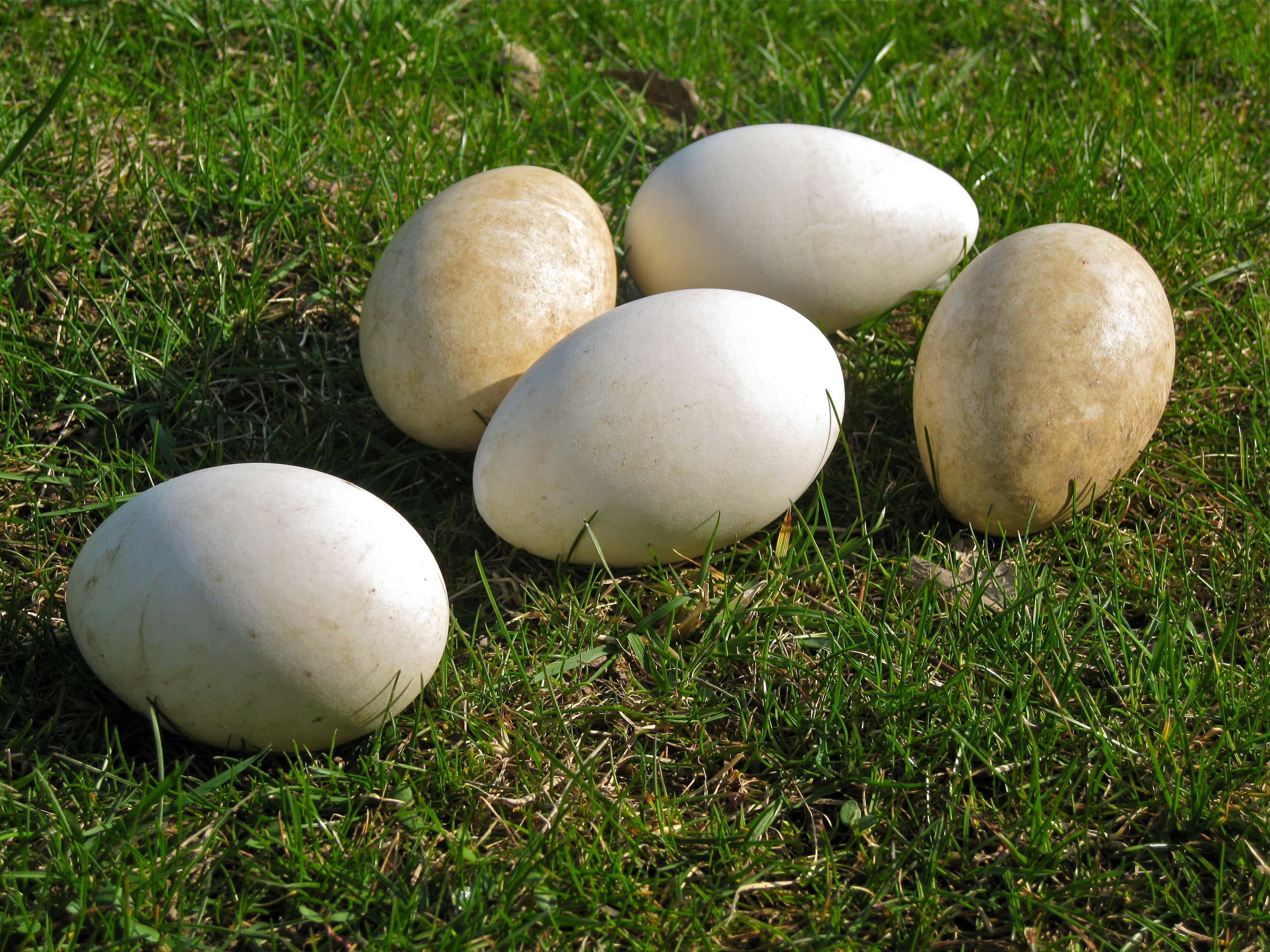
Domestic goose eggs often weigh considerably more than typical chicken eggs and have thick shells.
Goose eggs are substantially larger
Exact size depends on the goose breed and individual. Shell thickness can make cracking and cooking feel different, but it does not make an egg sterile or safe to eat raw.
When geese lay
Many goose breeds are seasonal layers, commonly responding to spring day length in temperate climates. Laying frequency and clutch size vary with management and breed. Geese are waterfowl, so their behavior and housing differ from chickens even when kept for the same purpose.
In the kitchen
Large goose eggs may replace several small chicken eggs by weight in recipes, but direct one-for-one substitution can change baking texture. For food safety, cook egg dishes thoroughly and avoid cross-contamination from shells and hands. Refrigeration and collection practices should follow local extension or food-safety guidance.
What makes a sound comparison
Compare egg mass, not just count. Yolk and white proportions differ among individual eggs, while feed and age can affect composition. A claim that goose eggs are inherently healthier than chicken eggs ignores serving size and the needs of the person eating them.
The shell does not prove freshness
Goose egg shells may feel thicker and harder to open, but shell thickness alone does not indicate microbial safety. An egg from a backyard bird can still become contaminated during collection or handling. Keep clean and dirty equipment separate, follow appropriate storage guidance, and cook thoroughly. For culinary comparisons, consider the egg’s mass and the ratio of yolk to white. Do not claim a particular goose egg is a health supplement or a safer raw alternative to a chicken egg.
What a useful field note records
When observing birds or insects, write down location, season, appearance, food source, and behavior. Those details often separate similar-looking species and life stages. If an animal is being managed in captivity or on a farm, welfare and hygiene requirements need their own expert guidance; wild behavior is not a ready-made care plan.
From life history to responsible observation
An animal may behave differently as an egg, larva, juvenile, or adult, and seasonal changes may affect how easy it is to see. A species described as beneficial in one setting can be a pest or prey item in another. Use photographs and field notes without disturbing nests, colonies, or habitat. Where keeping or feeding animals is involved, follow the guidance appropriate to that exact species and local rules, not a general wildlife description.
Frequently asked question
Does one goose egg equal one chicken egg?
Usually not by weight. A goose egg is typically much larger, so recipe substitutions should be measured.
Related guides
Turkey Eggs • Chicken Eggs Explained • What Is Poultry? Types, Characteristics, and Basic Husbandry
