Turkey Eggs: Size, Color, Laying Habits, and Comparison With Chicken Eggs
Turkey Eggs. Explain egg traits and seasonal laying; avoid incorrect nutrient superiority.
Turkey Eggs: Size, Color, Laying Habits, and Comparison With Chicken Eggs
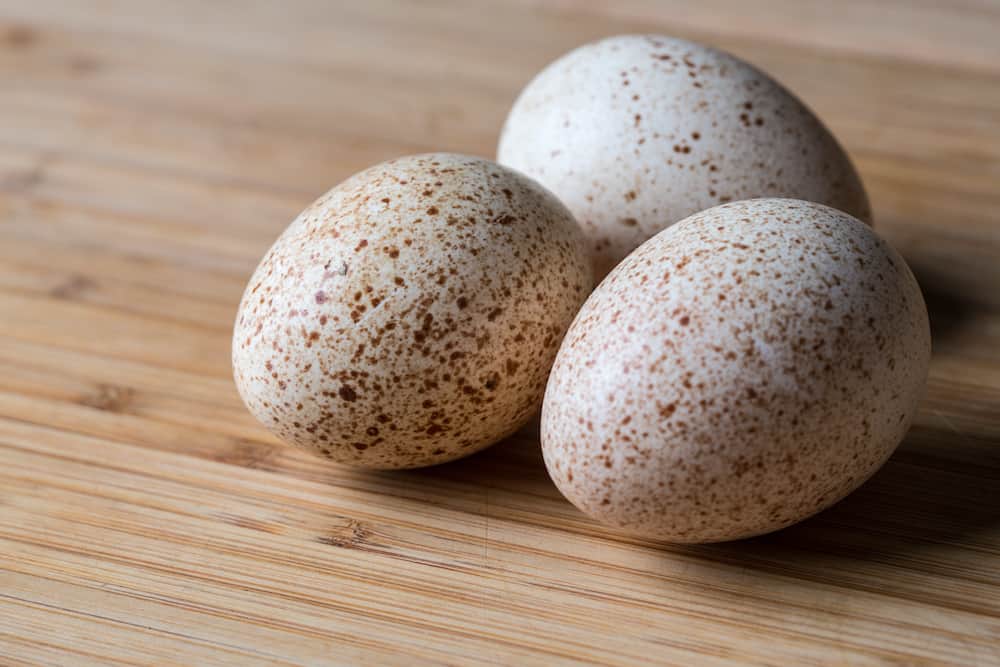
Turkey eggs are generally larger than standard chicken eggs, with sturdy shells that are often cream-colored or lightly speckled.
What turkey eggs look like
Color and exact size vary by bird, breed, and laying cycle. A speckled shell does not indicate fertilization or superior nutritional value.
Why turkeys lay fewer eggs commercially
Domestic turkeys are bred primarily for meat in many production systems, and turkey hens typically lay on a different seasonal pattern than high-producing chicken layers. Incubation is approximately four weeks rather than the chicken’s three weeks. Fertility and hatch rates depend on breeding and incubation conditions.
Cooking and safe storage
A turkey egg can be used in many of the same cooked dishes as a chicken egg, but portion size is different. Raw eggs should be kept clean, promptly refrigerated when appropriate, and cooked thoroughly. An unusual shell color or shell thickness does not protect against foodborne bacteria.
How they compare with chicken eggs
Turkey eggs have similar basic structures: shell, membranes, albumen, yolk, and a developing germinal disc if fertilized. Differences in proportions and flavor are influenced by the birds and diet. Nutrition comparisons should use equal weights or servings, not one turkey egg versus one small chicken egg.
A fair recipe and nutrition comparison
Recipes frequently treat “one egg” as a unit, but an egg from a turkey can contain considerably more edible material than a small chicken egg. For baking, weighing eggs is more consistent than guessing conversions by count. Nutritional values should likewise be compared per 100 grams or another standard amount. Keep the preparation method constant, since frying and adding ingredients changes the final dish. For breeding, ordinary edible-egg handling information is not an incubation manual; those tasks have different requirements.
What a useful field note records
When observing birds or insects, write down location, season, appearance, food source, and behavior. Those details often separate similar-looking species and life stages. If an animal is being managed in captivity or on a farm, welfare and hygiene requirements need their own expert guidance; wild behavior is not a ready-made care plan.
From life history to responsible observation
An animal may behave differently as an egg, larva, juvenile, or adult, and seasonal changes may affect how easy it is to see. A species described as beneficial in one setting can be a pest or prey item in another. Use photographs and field notes without disturbing nests, colonies, or habitat. Where keeping or feeding animals is involved, follow the guidance appropriate to that exact species and local rules, not a general wildlife description.
Frequently asked question
Can turkey eggs be cooked like chicken eggs?
Yes, but adjust for the larger egg size and follow standard egg food-safety handling.
Related guides
What Is Poultry? Types, Characteristics, and Basic Husbandry • Goose Eggs • Chicken Eggs Explained
