Rabbit Toys: What to Choose and What to Avoid
Compare toys for rabbits by play style, materials and safety. Learn how to choose tunnels, toss toys and foraging options without unsafe parts.
Rabbit Toys: What to Choose and What to Avoid
Rabbit toys are most useful when they give a rabbit something meaningful to do: push an object with the nose, toss a lightweight item, search for food, explore a safe hideout, or investigate a new texture. The best toy is not necessarily the most expensive one. A plain cardboard box, an appropriately sized rolling toy, or a simple forage puzzle can be more engaging than a complicated product that your rabbit ignores.
For a rabbit who has never used toys before, begin with two or three safe options and observe which behaviors appear naturally. Some rabbits like to rearrange objects; others prefer searching for food. Supervise new items and remove anything that splinters, sheds pieces, traps a head or foot, or gets eaten in unsafe amounts. This is a broad buyer's guide to rabbit toys, not a ranking of specific brands or a substitute for space, companionship, and veterinary care.
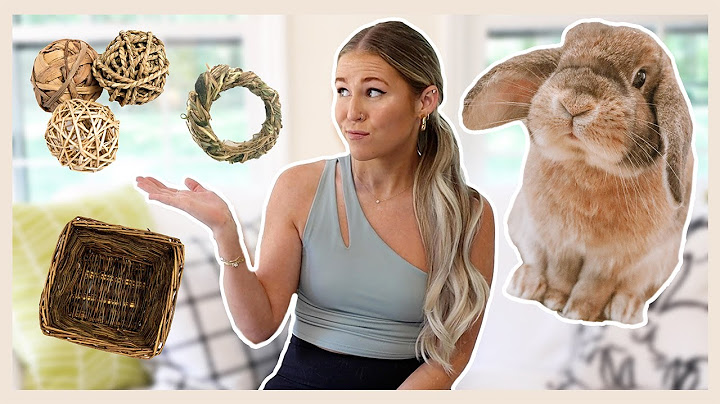
Match the toy to what your rabbit already likes doing
A useful way to shop is to start with behavior rather than a marketing label. A rabbit that nudges dishes may enjoy a sturdy rolling ball or a large, lightweight toss item. A curious rabbit may investigate stacked, open-ended cardboard structures with more than one clear exit. A food-motivated rabbit can try a simple puzzle that releases part of the rabbit's usual pellet ration. More complex is not automatically better; frustration can make a toy less valuable than an easy, repeatable game.
Watch what happens when the object is placed nearby. An interested rabbit may approach, sniff, touch, circle, nudge, or return to it. A rabbit that freezes, hides, lunges defensively, or repeatedly moves away needs more distance and a slower introduction. Do not force the rabbit into a tunnel, lift the rabbit onto a toy, or keep presenting the object after it shows avoidance. If you want to play interactively rather than choose equipment, use the separate how to play with a rabbit guide.
Four practical toy categories
Toss-and-roll toys should be big enough that they cannot be swallowed, light enough to move without strain, and free of loose bells, caps, or fasteners. Some rabbits enjoy moving a safe object across the floor; others ignore it. Select by the actual construction and your rabbit's chewing behavior rather than assuming a product labeled “small animal toy” is automatically safe.
Cardboard exploration toys include plain boxes with smooth-cut openings, sturdy paper tubes of an appropriate diameter, and foldable shelters. They work best when there are no staples, tape, plastic-coated surfaces, sharp edges, or dangling handles. Cardboard is an activity material, not a food: if your rabbit swallows significant quantities or tears off large pieces, discontinue that particular item. Use a separate guide for rabbit tunnels rather than making this article a full tunnel-sizing review.
Foraging and puzzle toys allow a rabbit to nose or shift parts to find ordinary food. Put a small amount of the rabbit's already-allocated pellets or suitable greens into a simple feeder, then start with the easiest setting. Make sure each rabbit in a pair can access resources without guarding or competition. Food found in a puzzle should replace, not add to, the day's planned ration. Our rabbit treats guide covers how to choose rewards without relying on sugary snacks.
Exploration and activity objects may include stable, low obstacles or safe hide-and-seek items. Leave enough clear floor for hopping, stretching, and standing up normally. A toy is not enrichment if it makes the living area crowded. Dedicated chewing materials, digging setups, and exercise pens have their own guides: rabbit chew toys, rabbit digging boxes, and rabbit playpens.
Materials and construction: a safety checklist
Start by inspecting the entire toy, including seams, hinges, labels, and attachments. Plain uncoated cardboard and known rabbit-safe untreated natural materials can be useful, but “natural” is not an ingredient guarantee. Avoid wood that has been painted, pressure-treated, varnished, or exposed to unknown chemicals. Do not use unidentified branches, wild plants, or decorative dried flowers simply because they appear organic. House Rabbit Society and RSPCA recommend choosing known-safe materials and keeping a close watch on what the animal does with them.
Check for small plastic parts, loose metal fittings, adhesives, long strings, elastic loops, sharp corners, and narrow gaps that might trap a foot or head. A toy sold for a child, cat, or bird may have components unsuitable for a rabbit, even if it looks sturdy. Fabric can be especially risky for rabbits that pull out and swallow fibers; monitor closely and remove anything that gets chewed apart. Likewise, avoid assuming colored ink or glossy packaging is harmless simply because a rabbit seems interested.
Look at wear every day, not only when buying. If an item cracks, frays, develops rough edges, or becomes soiled beyond cleaning, replace it. A toy containing food also needs cleaning between uses; trapped wet greens and moisture can spoil. Introduce one new material at a time so you can identify the source if your rabbit seems uncomfortable or starts destroying it in an unsafe way.
Choosing size and difficulty without brand hype
A toy should fit the rabbit's body and skill level. For a small rabbit, a heavy object may be impossible to move; for a larger, enthusiastic rabbit, a flimsy puzzle can break. If a tunnel-like object is included in a set, confirm the rabbit can turn around safely rather than merely squeeze inside. For any puzzle, ask whether your rabbit can reach the food without forcing teeth or paws into a narrow mechanism.
Choose a simple design you can examine, clean, and replace. Promotional claims such as “indestructible,” “anxiety curing,” or “vet approved for every rabbit” need stronger evidence than packaging slogans. We have not hands-on tested or ranked commercial products here. The goal is to teach you which features to check before purchasing, especially if your rabbit tends to chew everything it touches.
A realistic toy-rotation routine
Keep a few familiar favorites available and rotate one or two other items every several days, depending on how your rabbit responds. For example, offer a cardboard hideout and a rolling toy today; introduce an easy forage puzzle on another day. Do not remove all familiar objects at once from a nervous rabbit. Predictability matters, and novelty should be a choice rather than a surprise that blocks access to food, water, or hiding places.
When more than one rabbit shares a space, provide enough usable items that one animal cannot control every resource. Observe both rabbits' responses. A rabbit resting calmly beside a toy is not “failing” to play; enrichment also means freedom to choose when to interact. If your rabbit becomes withdrawn, stops eating, or produces fewer droppings, that is a health concern—not a sign that you simply need a better toy. Seek prompt advice from a rabbit-experienced veterinarian.
A simple first-week plan
Days 1–2: Offer one plain cardboard exploration item in a familiar area. Observe from a short distance without repeatedly touching the rabbit. Days 3–4: Add a lightweight toss-and-roll object, keeping easy exits and hiding places clear. Days 5–6: Try a very easy forage puzzle using part of the usual ration, not an extra sugary treat. Day 7: Keep what the rabbit enjoys, remove objects that are ignored or unsafe, and choose the next activity based on observed behavior rather than a fixed shopping list.
This plan is optional, not a universal training schedule. A timid rabbit may need much more time. A senior rabbit or one with mobility limitations may benefit from floor-level activities with no jumping. The best measure is safe, voluntary interest.
Frequently Asked Questions
What are the best toys for rabbits that mostly ignore toys?
Start with familiar, low-effort items such as plain cardboard, a stable hiding spot, or a simple forage game. Place them nearby and let the rabbit approach voluntarily. Try a different category rather than buying a more complicated version of the same toy.
Are cardboard toys safe for rabbits?
Plain, untreated cardboard may be suitable for supervised play when free from staples, tape, plastic coatings, and sharp edges. Stop offering it if the rabbit tears off and swallows large amounts or if the material becomes wet or contaminated.
Do rabbits need expensive puzzle feeders?
No. A basic hay-stuffed tube or a small food-search activity can provide meaningful enrichment. Use a portion of food already in the daily ration and keep the task easy enough that the rabbit does not become frustrated.
How many toys should be in a rabbit enclosure?
There is no single correct count. Provide variety while preserving clear room to hop, stretch, stand upright, and retreat. For bonded rabbits, make sure each has access without competition or guarding.
Is it safe to leave a new toy overnight?
Supervise first. Only consider leaving an item after you have assessed its materials, breakage risk, and your rabbit's chewing behavior. Remove toys that shed pieces, trap paws, have loose cords, or encourage unsafe ingestion.