Why Does My Cat Bite Me? Play, Fear and Overstimulation
Why Does My Cat Bite Me Play, Fear and Overstimulation. Discover practical facts, risks, and care considerations before you decide what to do next.
Why Does My Cat Bite Me? Play, Fear and Overstimulation
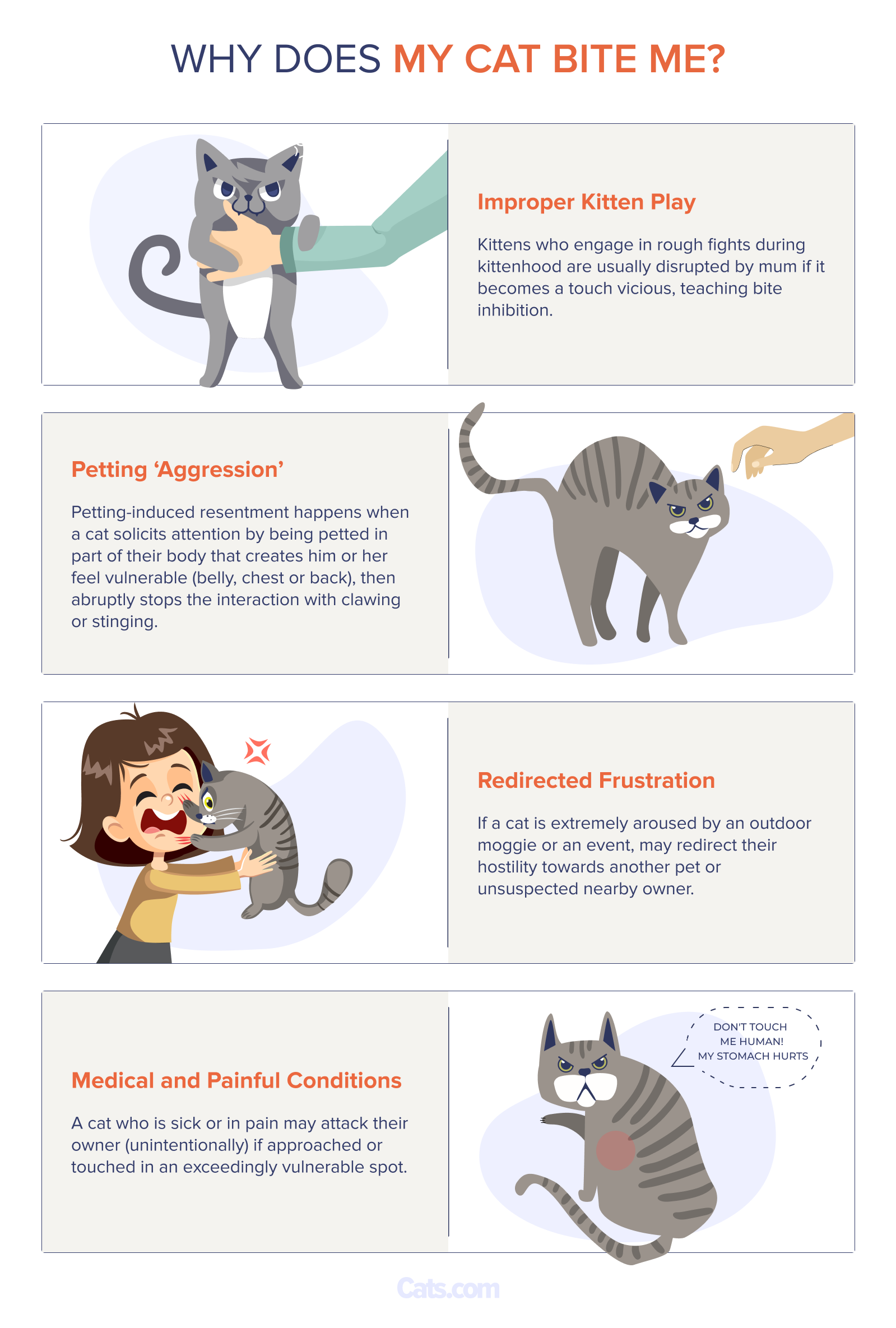
A cat bite can occur during energetic play, when petting becomes overwhelming, or when the cat feels threatened or painful. The same action can have different motivations. Short, sudden nips during stroking often follow subtle signals such as tail twitching, skin rippling, turned ears, or a stiff body.
What the context tells you
Cats may target hands when humans routinely use fingers as toys. This pattern is reinforced each time the hand moves like prey. Defensive biting is different: a frightened cat often needs an exit route, lower stimulation, and protection from forced handling.
Practical steps and everyday care
Stop interaction before the cat reaches its limit, use wand toys rather than hands, and reward calm engagement. Ask children to let the cat approach voluntarily. If a bite breaks human skin, wash promptly and seek medical advice because cat bites can become infected.
Pay attention to context and baseline behavior
Cats communicate through combinations of ear position, eyes, tail movement, posture, vocalization, and distance from people or other animals. A normally relaxed cat reacting differently may be responding to environmental changes or discomfort. Track when the change began, access to food and litter, medications, and any new plants or products. Quiet hiding does not necessarily mean a cat is comfortable; changes in eating, grooming, elimination, or activity are important.
A real-world example
Imagine a cat enjoying three strokes, flicking the tail, and then nipping at the fourth. The useful intervention is to stop before the warning signals escalate, not to teach the cat that its warning is punished. For play biting, redirect to a wand toy and keep fingers out of the game. New pain-related biting requires medical assessment.
When to get veterinary advice
Sudden aggression or painful reactions to touch warrant a veterinary assessment. Do not yell, hit, scruff, or spray water; punishment can increase fear and make warning signals less visible.
A quick decision checklist
Check whether this differs from the cat’s usual behavior, eating, and litter routine.
Differentiate play biting, petting-related biting and defensive aggression; avoid punishment.
Note body language, appetite, litter habits, and changes in the home.
Seek qualified veterinary, extension, or species-specialist guidance before using medication or making major changes.
Frequently asked questions
What if the behavior or symptom starts suddenly?
A sudden departure from the cat's normal pattern deserves closer attention. If appetite, breathing, elimination, mobility, or alertness is affected, contact a veterinarian promptly. Never use human medications or essential oils as a substitute for a diagnosis.
How do I know this advice fits my cat?
Compare the change with your cat’s normal eating, activity, litter, grooming, and body language. A sudden or persistent departure from baseline deserves professional advice.
Related reading
Reliable resources for further checking
Editorial status: draft. Check current professional guidance and local rules before publication; urgent symptoms require appropriate veterinary help.
