Lesser Goldfinch: Appearance, Calls and Range
Lesser Goldfinch: Appearance, Calls and Range Explore evidence-based facts, context and common misconceptions.
Lesser Goldfinch: Appearance, Calls and Range
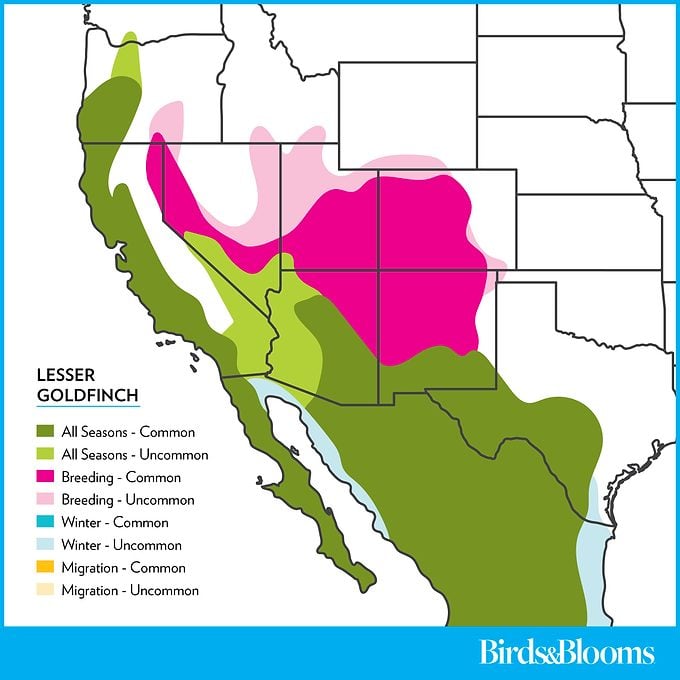
The Lesser Goldfinch is a small seed-eating finch of the western and southwestern Americas. Males vary geographically in how much black they show on the back, but yellow underparts and a compact, conical bill are characteristic.
The essentials
The birds frequent weedy fields, woodland edges, and gardens where small seeds are available. Their bouncy flight and twittering calls can help distinguish them from other similarly sized finches.
What makes this subject distinctive
Not every yellow goldfinch is an American Goldfinch. The two differ in voice, distribution, seasonal plumage, and pattern; field identification works better with several clues than with yellow coloration alone.
Food sources, safe nesting places, and movement between habitats influence where birds appear. A forest bird may visit a campsite, and a grassland bird may cross a suburb, but a brief encounter cannot establish its preferred year-round habitat. Regional field guides and dated sightings give important context.
Common misconceptions and limits
Regional plumage variation is normal within Lesser Goldfinches. Photographs without date and location can hide important information needed for a confident identification.
Wild birds should be described as part of an ecosystem, not as pets whose behavior can be controlled. Habitat, season, and the age or sex of the animal can change the observations available to a field researcher. Good sources include regional bird atlases and field observations with dates.
Where observation matters
Field marks change with lighting, molt, age, and the season. Good bird identification combines shape, behavior, voice, and geographic range rather than treating one colorful photograph as the definitive answer. It is also important to distinguish a bird seen during migration from evidence that it breeds locally.
Key points at a glance
The Lesser Goldfinch is a small seed-eating finch of the western and southwestern Americas.
The birds frequent weedy fields, woodland edges, and gardens where small seeds are available.
Not every yellow goldfinch is an American Goldfinch.
Frequently asked questions
What is a useful first identification clue?
The Lesser Goldfinch is a small seed-eating finch of the western and southwestern Americas.
Does appearance or behavior vary?
The birds frequent weedy fields, woodland edges, and gardens where small seeds are available.
What should be checked before making a broad claim?
Regional plumage variation is normal within Lesser Goldfinches.
Explore related guides
A Field Guide to Wild Birds: Identification, Habitats, Behavior and Conservation
