How to Cycle a Fish Tank: Understanding the Nitrogen Cycle
How to Cycle a Fish Tank: Understanding the Nitrogen Cycle. Discover practical facts, risks, and care considerations before you decide what to do next.
How to Cycle a Fish Tank: Understanding the Nitrogen Cycle
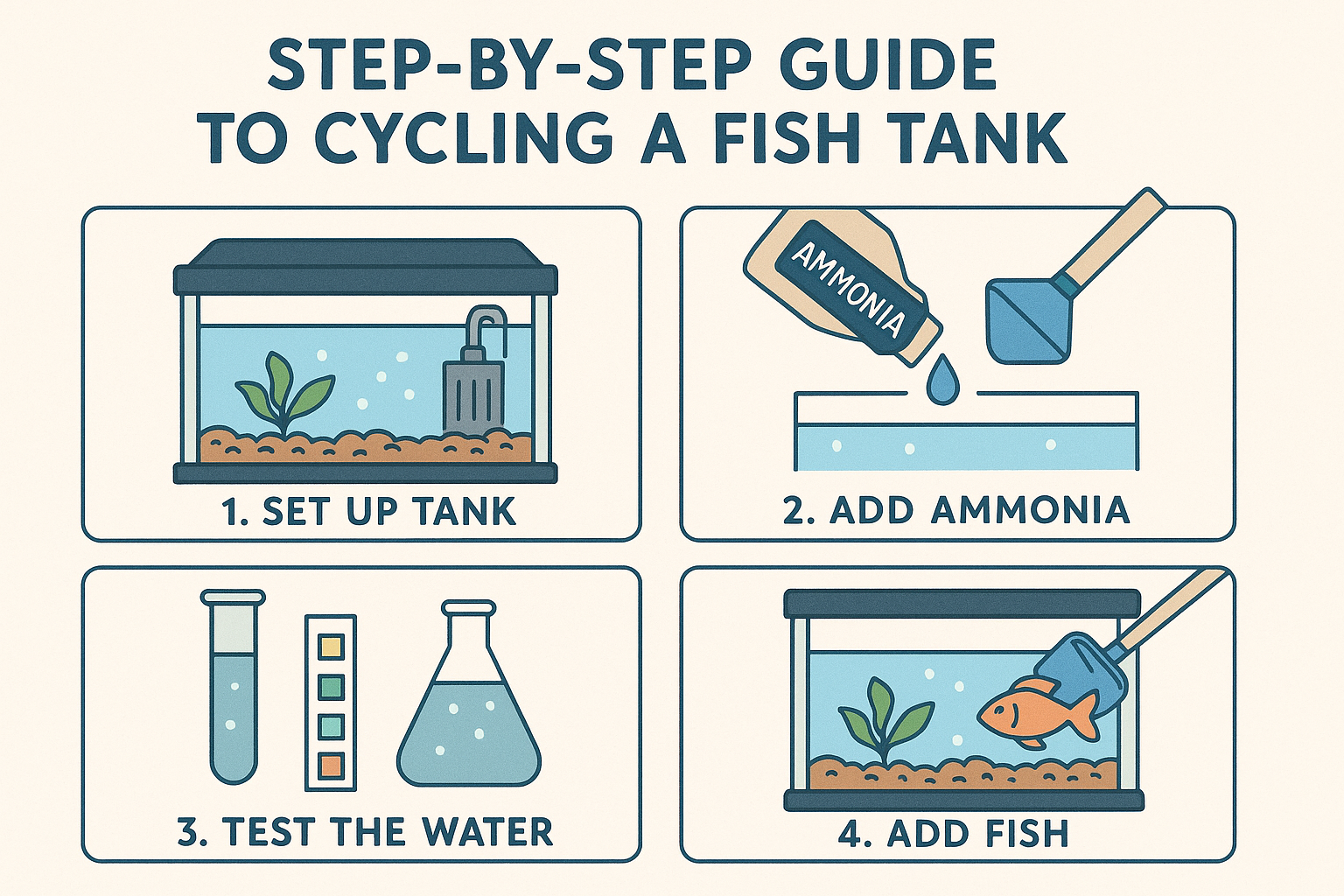
Cycling an aquarium means establishing microorganisms that convert toxic ammonia into nitrite and then into nitrate. This biological filtration is essential because fish release ammonia through waste and food decomposition adds more. A tank containing water and a filter is not automatically cycled.
What the context tells you
Fishless cycling allows the keeper to establish a biofilter before introducing animals, avoiding unnecessary exposure to ammonia and nitrite. Use an appropriate ammonia source and a reliable liquid testing method; monitor the conversion pattern rather than trusting a fixed number of calendar days.
Practical steps and everyday care
Build the entire setup with working filter and aeration, dechlorinated water, and stable temperature for intended livestock. Test regularly and confirm the system can process its planned bioload. Once animals are introduced, increase stocking gradually and continue watching water parameters.
Check the system before changing the livestock
Fish and invertebrates live continuously in the water conditions their keepers create. Ammonia and nitrite should not be assumed safe simply because water is clear. Before changing stocking, food, pH, or equipment, confirm that the filter is established and that temperature and chemistry suit the exact species. Small, measured changes are easier to evaluate than several interventions at once, especially in a mature community tank.
A real-world example
A newly filled aquarium can test clear for ammonia because no waste source has been added yet. That is not evidence that the filter can process a full fish load. Fishless cycling tests the biological system over time and looks for the conversion of introduced ammonia through nitrite. Stocking slowly afterward lets the system adapt to real waste production.
Avoiding preventable tank problems
A cloudy new tank may or may not be experiencing bacterial bloom, so test rather than guessing. Avoid washing mature biological media in chlorinated tap water or changing all the filter media at once. High ammonia or nitrite with fish present requires urgent husbandry correction.
A quick decision checklist
Verify the species and test actual aquarium water before changing the setup.
Explain ammonia to nitrite to nitrate, testing and cycling without fish when possible.
Write down ammonia, nitrite, temperature, and other species-relevant test readings.
Seek qualified veterinary, extension, or species-specialist guidance before using medication or making major changes.
Frequently asked questions
Can I fix this by adding another fish or chemical?
Usually it is better to identify the actual cause first. Adding livestock increases the biological load, and chemical shortcuts can produce rapid changes. Testing and reviewing species needs should come before any major intervention.
What should I test or observe first?
Measure ammonia, nitrite, nitrate, temperature, and species-relevant hardness or salinity. Also check feeding, behavior, and whether the biological filter was recently disturbed.
Related reading
how do you lower ph in fish tank
Reliable resources for further checking
Editorial status: draft. Check current professional guidance and local rules before publication; urgent symptoms require appropriate veterinary help.
