Can Dogs See in the Dark? How Canine Night Vision Works
Can Dogs See in the Dark How Canine Night Vision Works. Discover practical facts, risks, and care considerations before you decide what to do next.
Can Dogs See in the Dark? How Canine Night Vision Works
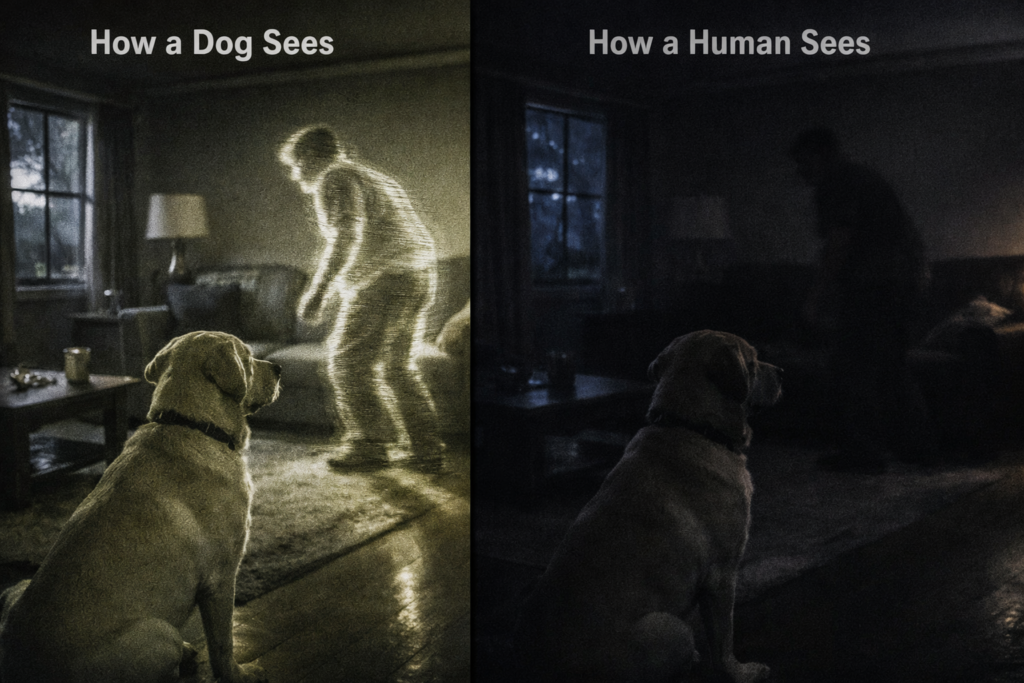
Dogs can often navigate dim light better than people, but they cannot see in complete darkness. Their eyes contain many rod photoreceptors that are sensitive to low light, and a reflective structure called the tapetum lucidum helps make use of available light. The trade-off is different color and fine-detail perception from human vision.
What the context tells you
Dogs perceive the world through a combination of sight, movement detection, smell, hearing, and learned spatial cues. They are not simply seeing a black-and-white movie. A dog's behavior in poor light also depends on age, eye health, confidence, and familiarity with the space.
Practical steps and everyday care
Keep pathways predictable for older dogs, use gentle night lighting around stairs, and avoid suddenly rearranging furniture if vision seems reduced. Watch for bumping, hesitating at thresholds, or eyes that appear cloudy or painful rather than assuming the dog is just nervous.
How to evaluate a change without jumping to conclusions
A change in a dog's behavior deserves a simple timeline: when it started, how often it occurs, what happened before it, and whether appetite, drinking, stool, walking, or energy changed at the same time. Pictures or a short video can be more helpful to a veterinary team than trying to assign a diagnosis from a single sign. Age, medications, recent travel, and exposures may also affect the interpretation. When symptoms are getting worse, don't delay care to finish collecting observations.
A real-world example
A dog that confidently walks a familiar hallway in dim light may be using memory, scent, and low-light vision together. If that same dog suddenly hesitates at dusk or bumps into furniture, the change deserves assessment. This is a reminder that visual performance is not measured only by whether a dog can find its way to a food bowl.
When to get veterinary advice
Night blindness or a sudden change in navigation can be associated with eye disease. Veterinary eye evaluation is worthwhile if a dog becomes reluctant to go out after dusk, collides with objects, or shows redness, squinting, or discharge.
A quick decision checklist
Check the dog’s age, current medications, recent exposures, and overall condition.
Contrast low-light vision with color vision and visual limits.
Record symptoms, timing, appetite, stool, activity, and any exposure that could help a veterinarian.
Seek qualified veterinary, extension, or species-specialist guidance before using medication or making major changes.
Frequently asked questions
Is this always an emergency?
Not every isolated behavior or mild sign requires emergency care. Sudden severe pain, collapse, trouble breathing, repeated unsuccessful vomiting, or rapid deterioration does. A veterinarian can help decide how quickly an otherwise stable dog should be examined.
What information is useful at a veterinary appointment?
Bring a timeline, photographs or video if possible, a list of medications and foods, and details of any exposures. Those facts can help the veterinarian interpret signs in context.
Related reading
Reliable resources for further checking
Editorial status: draft. Check current professional guidance and local rules before publication; urgent symptoms require appropriate veterinary help.
