Clownfish Care: Tank Setup, Diet and Compatibility
Clownfish Care: Tank Setup, Diet and Compatibility. Discover practical facts, risks, and care considerations before you decide what to do next.
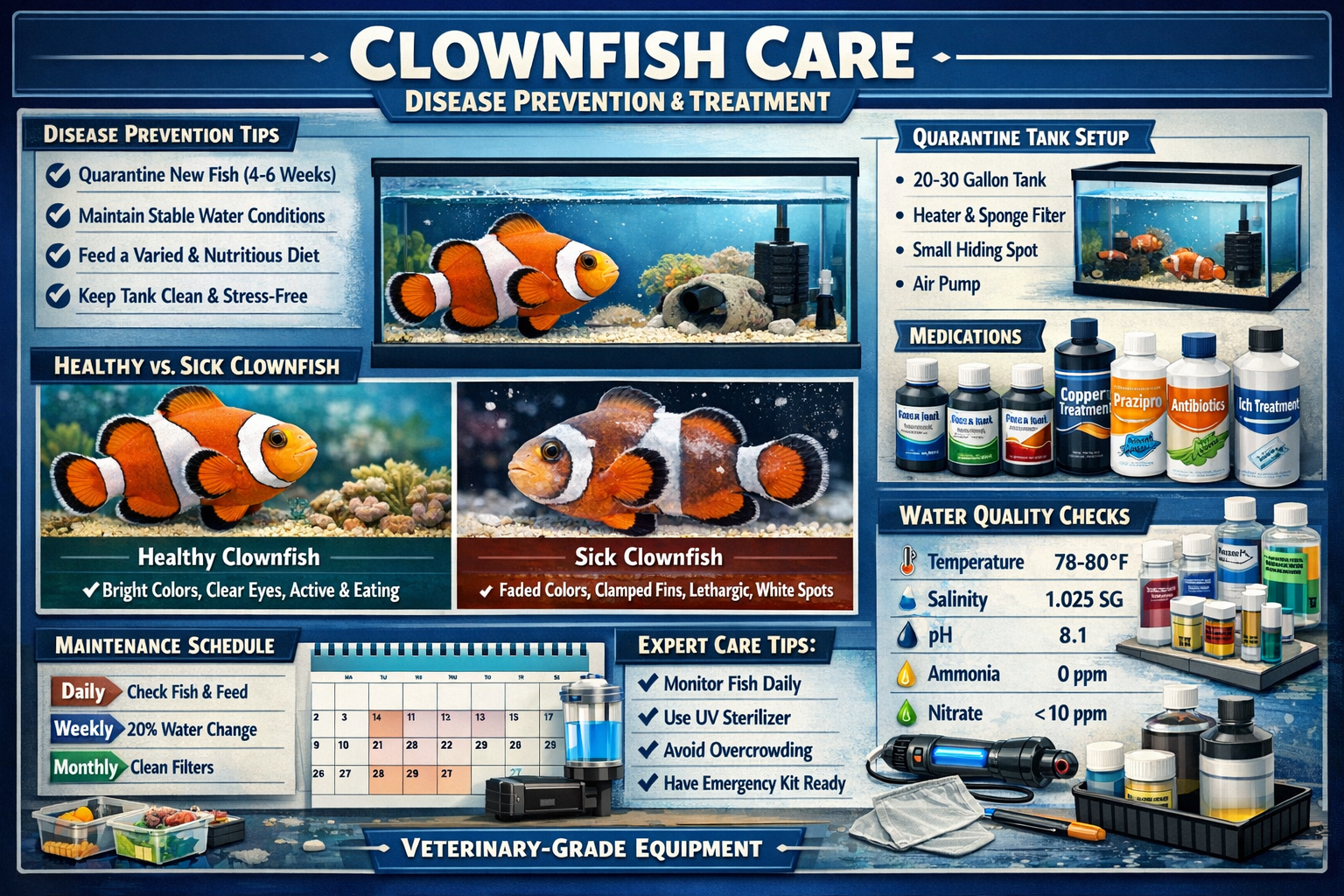
Clownfish Care: Tank Setup, Diet and Compatibility
Clownfish are marine fish, not freshwater beginners' fish, even though captive-bred individuals can be hardy in a well-established saltwater aquarium. Stable salinity, temperature, biological filtration, and proper marine equipment are foundational. Species and individual temperament influence compatibility.
What the context tells you
Clownfish can live without a host anemone. Anemones have their own demanding light, water, and stability needs and should not be bought as mandatory decoration. Established pairs may defend a territory and harass newly added fish.
Practical steps and everyday care
Use marine salt mixed and measured with reliable equipment, acclimate carefully, and test ammonia, nitrate, and salinity. Offer a varied, appropriate prepared and frozen diet and watch for normal feeding. Quarantine or disease-prevention procedures can prevent major losses.
Check the system before changing the livestock
Fish and invertebrates live continuously in the water conditions their keepers create. Ammonia and nitrite should not be assumed safe simply because water is clear. Before changing stocking, food, pH, or equipment, confirm that the filter is established and that temperature and chemistry suit the exact species. Small, measured changes are easier to evaluate than several interventions at once, especially in a mature community tank.
A real-world example
A beginner might buy clownfish and an anemone together because of a movie image. The fish can be maintained without that invertebrate, and the anemone adds demanding husbandry needs. Establish the marine tank first and prioritize stable salinity, filtration, and careful stocking before considering any additional organism.
Avoiding preventable tank problems
Do not assume a small saltwater tank is easy because clownfish are familiar from movies. Rapid salinity changes, poor water quality, or aggressive tankmates can overwhelm even captive-bred fish.
A quick decision checklist
Verify the species and test actual aquarium water before changing the setup.
Explain marine salinity stability, tankmates and the limits of captive breeding claims.
Write down ammonia, nitrite, temperature, and other species-relevant test readings.
Seek qualified veterinary, extension, or species-specialist guidance before using medication or making major changes.
Frequently asked questions
Can I fix this by adding another fish or chemical?
Usually it is better to identify the actual cause first. Adding livestock increases the biological load, and chemical shortcuts can produce rapid changes. Testing and reviewing species needs should come before any major intervention.
What should I test or observe first?
Measure ammonia, nitrite, nitrate, temperature, and species-relevant hardness or salinity. Also check feeding, behavior, and whether the biological filter was recently disturbed.
Related reading
how do you lower ph in fish tank
Reliable resources for further checking
Editorial status: draft. Check current professional guidance and local rules before publication; urgent symptoms require appropriate veterinary help.
