Great Egrets: Identification, Habitat and Hunting
Great Egrets: Identification, Habitat and Hunting Explore evidence-based facts, context and common misconceptions.
Great Egrets: Identification, Habitat and Hunting
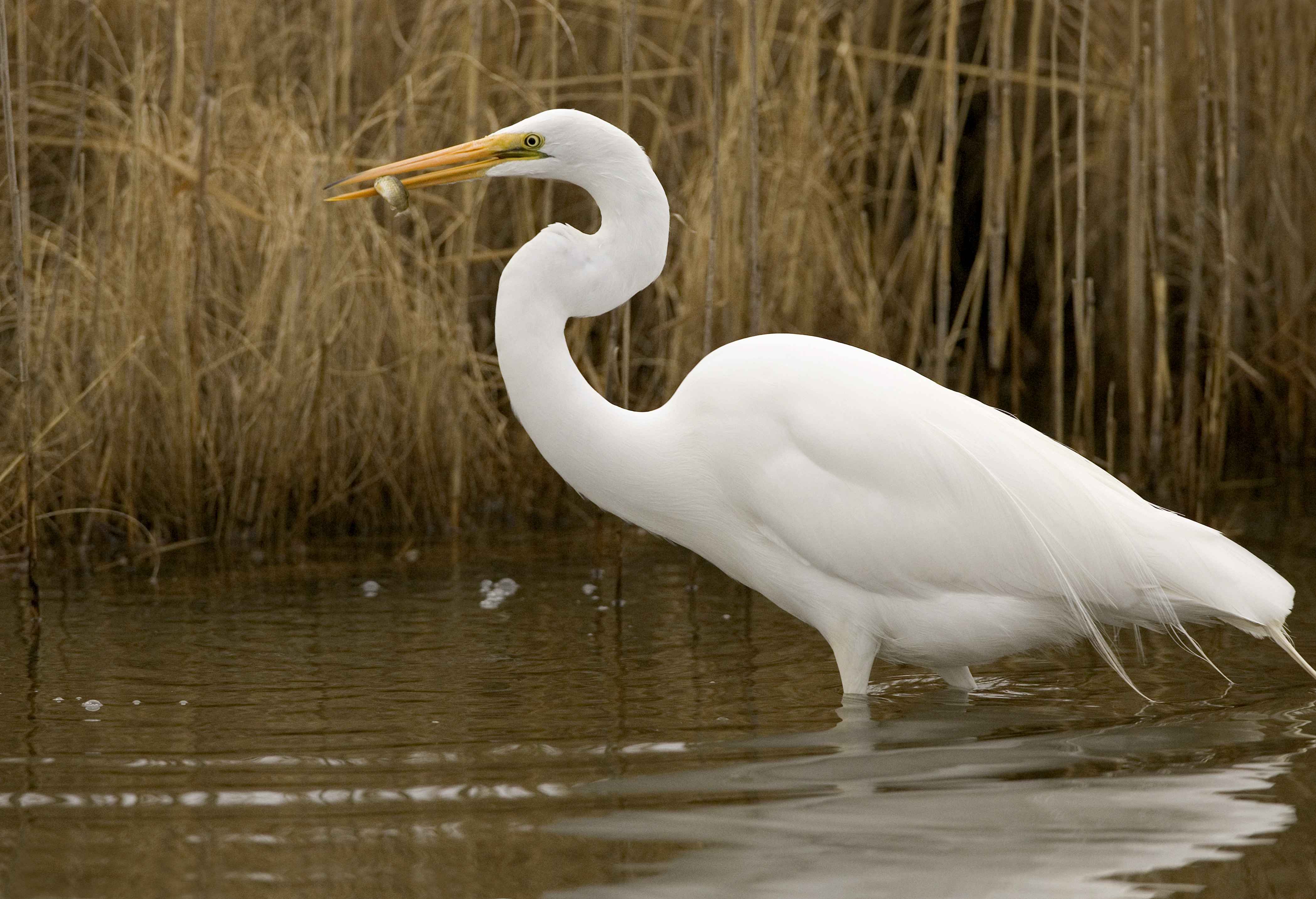
The Great Egret is a tall, all-white heron with a long neck, yellow bill in typical breeding-age adults, and dark legs. It hunts along marshes, ponds, tidal flats, and other shallow waters in many parts of the world.
The essentials
An egret commonly stands still or walks slowly before striking at a fish, amphibian, or other small animal. This patient hunting style reduces disturbance in shallow water and allows the bird to track movement below the surface.
What makes this subject distinctive
White plumage alone is not enough for identification: Snowy Egrets are smaller and typically have dark bills and bright yellow feet, while larger herons differ in posture and proportion. Season and age can change bill color.
Food sources, safe nesting places, and movement between habitats influence where birds appear. A forest bird may visit a campsite, and a grassland bird may cross a suburb, but a brief encounter cannot establish its preferred year-round habitat. Regional field guides and dated sightings give important context.
Common misconceptions and limits
Great Egrets were heavily hunted for ornamental feathers in the past. Their history illustrates why wetland protection and regulation of wildlife trade matter, but local abundance still depends on habitat and water conditions.
Wild birds should be described as part of an ecosystem, not as pets whose behavior can be controlled. Habitat, season, and the age or sex of the animal can change the observations available to a field researcher. Good sources include regional bird atlases and field observations with dates.
Where observation matters
Field marks change with lighting, molt, age, and the season. Good bird identification combines shape, behavior, voice, and geographic range rather than treating one colorful photograph as the definitive answer. It is also important to distinguish a bird seen during migration from evidence that it breeds locally.
Key points at a glance
The Great Egret is a tall, all-white heron with a long neck, yellow bill in typical breeding-age adults, and dark legs.
An egret commonly stands still or walks slowly before striking at a fish, amphibian, or other small animal.
White plumage alone is not enough for identification: Snowy Egrets are smaller and typically have dark bills and bright yellow feet, while larger herons differ in posture and proportion.
Frequently asked questions
What is a useful first identification clue?
The Great Egret is a tall, all-white heron with a long neck, yellow bill in typical breeding-age adults, and dark legs.
Does appearance or behavior vary?
An egret commonly stands still or walks slowly before striking at a fish, amphibian, or other small animal.
What should be checked before making a broad claim?
Great Egrets were heavily hunted for ornamental feathers in the past.
Explore related guides
A Field Guide to Wild Birds: Identification, Habitats, Behavior and Conservation
